
The moment I reached row 7 and saw a stranger sitting in my six-year-old daughter’s window seat, my stomach sank.
Emma stood beside me, clutching her stuffed airplane. It was her first flight, and the noise, crowds, and unfamiliar surroundings had already left her on edge. Months earlier, I had paid extra to reserve seats 7A and 7B because the window helped calm her whenever she felt overwhelmed.
Two years had passed since I lost my husband, Sean. I had spent months saving for this four-day beach vacation, which had cost nearly $2,000 in total. That morning, I had checked our boarding passes twice.
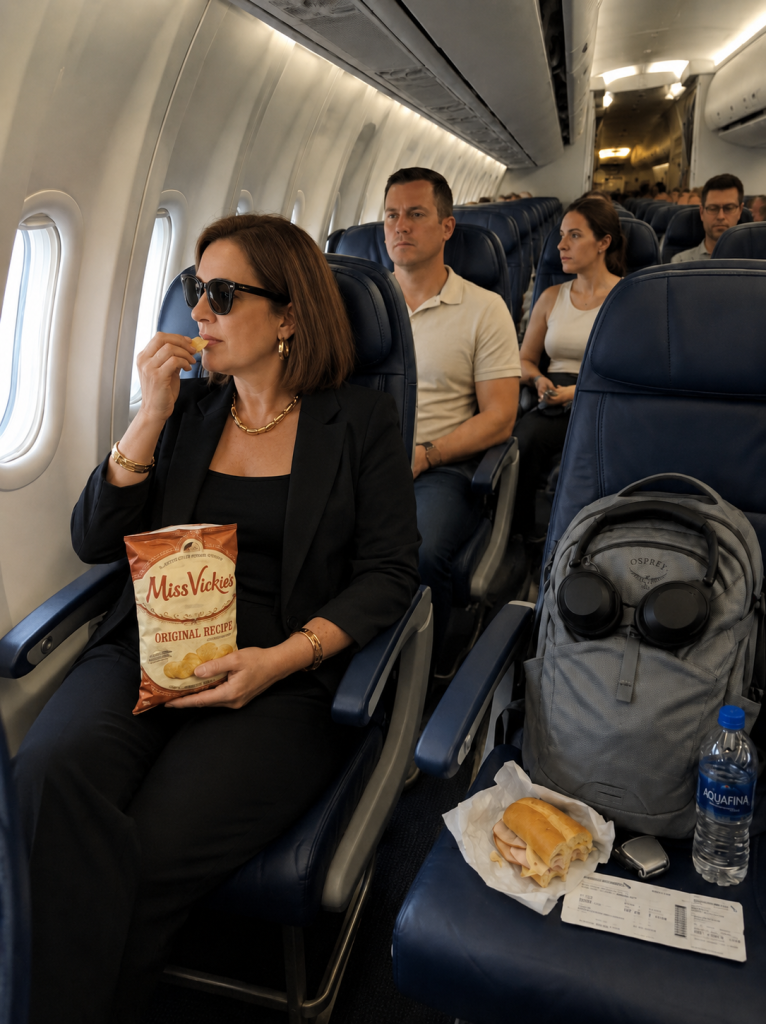
But there she was—a sharply dressed woman comfortably settled into 7A, taking photos as though the seat had always been hers.
I politely showed her our tickets.
She barely looked at them.
“I’m not moving,” she said.
A flight attendant named Lisa soon discovered the problem. After an aircraft change, the airline had accidentally assigned 7A to two passengers. Emma had reserved it months earlier, while the woman’s original seat was 14C.
I quietly explained that Emma was autistic and that looking out the window wasn’t simply something she liked. Watching the clouds helped her regulate herself when she became anxious.
Lisa offered the woman another aisle seat.
She refused.
“That’s not my problem,” she replied.
Passengers were beginning to line up behind us, and Emma had started shaking. Rather than create a scene, I accepted the middle and aisle seats in row 12.
As we walked away, I noticed Lisa stop beside a couple farther back and whisper something to them. Moments later, she picked up the interphone and spoke quietly toward the cockpit.
I had no idea what she was planning.
About 90 minutes into the flight, Emma was still struggling. Her headphones, coloring book, and every calming technique I knew weren’t enough.
Then the captain’s voice came over the speakers.
“Ladies and gentlemen, the passenger in 7A has been selected for a special gift.”
Lisa approached the woman with a wrapped box. The woman smiled proudly and immediately lifted her phone to record.
Inside was a card.
It explained that the crew had witnessed a situation in which a young child had lost her previously reserved seat because of an airline error—and that there had been an opportunity to show a little more kindness.
The cabin fell silent.
There was no lawsuit, insurance dispute, mortgage problem, investment conflict, estate hearing, or courtroom battle behind the situation.
It was simply an airline mistake—and a choice about how people respond to one another.
Then Captain Brown thanked a couple sitting in row 19.
They had voluntarily agreed to give Emma their window seat once it was safe for everyone to move.
Applause slowly filled the cabin.
Lisa returned to us with a smile.
“Emma’s window seat is waiting.”
When Emma finally sat beside the glass, she pressed both hands against the window and stared at the bright sky as if she were looking into another world.
“Mommy,” she whispered, “the clouds look like pillows.”
I laughed through tears.
The couple who gave up their seats never asked for recognition. They simply smiled and told us they were happy to help.
After we landed, Captain Brown met us near the cockpit and handed Emma a tiny pair of pilot wings to remember her first flight.
The trip I had worried might fall apart before it even began suddenly felt possible again.
As Emma held my hand and talked nonstop about the clouds while we walked through the terminal, I realized something.
I wouldn’t remember that day because one passenger refused to move.
I’d remember it because, when my little girl needed a little extra space and understanding, several strangers quietly chose to make room for her.