
Thirty Years After He Vanished, I Finally Learned Why
Some moments divide life into a before and an after.
For me, that moment came one week before my wedding—though it would take another thirty years before I truly understood it.
I was 32 when I met Robert.
He was kind, gentle, and carried a burden that would have sent many people running. He was raising ten children alone after losing his wife two years earlier.
We met in a grocery store.
His cart was overflowing with groceries, and he was trying to calm a toddler who had stretched her arms toward me. Robert apologized as he picked her up.
“She does that with anyone who smiles at her,” he said.
“Then I suppose I’ll keep smiling,” I replied.
That little girl was Sophie, and that brief encounter changed everything.
I didn’t just fall in love with Robert.
I fell in love with his children.
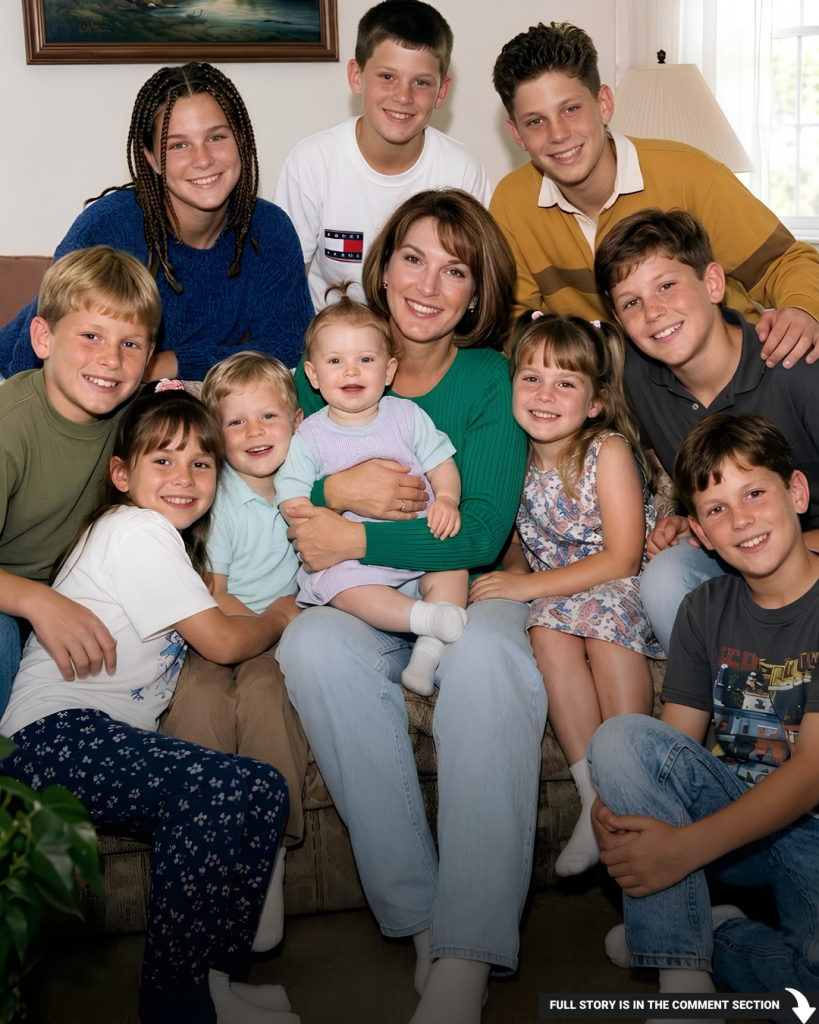
There was Amanda, wise beyond her years; quiet Derrick, who could fix almost anything; Sue, who spoke with her hands whenever she became excited; mischievous twins Jacob and David; four energetic quadruplets; and little Sophie, who eventually started calling me “Mama” without anyone prompting her.
Soon, I was spending more time at their house than my own—helping with homework, cooking meals, finding missing socks, and comforting scraped knees.
It all felt natural.
Six months later, Robert proposed over meatloaf and mashed potatoes while ten children pretended not to eavesdrop from the hallway.
“Will you marry us?” he asked.
I said yes through tears.
My mother thought I had lost my mind.
“Ten children, Margaret,” she warned repeatedly. “You’re making a mistake.”
But by then, they already felt like mine.
Then, one week before our wedding, everything changed.
I woke up to an empty house. Robert’s truck was gone. His phone was off.
On the kitchen table sat a note.
Just three sentences.
I’m sorry.
I can’t do this anymore.
There was nothing else.
No explanation. No goodbye.
My world collapsed.
Moments later, Sophie walked into the kitchen in her pajamas, wrapped her arms around my leg, and asked, “Mama, juice?”
That was the moment my life split in two.
My mother urged me to walk away.
“Let the system take the children,” she said. “They’re not your responsibility.”
But when I looked around the table at ten frightened faces, I knew I couldn’t leave.
I loved them.
They were already my children.
I fought for guardianship, which eventually became adoption. The years that followed were the hardest of my life.
I worked long days at a fabric warehouse and spent nights sewing school uniforms for extra money. The older children helped raise the younger ones. Life was exhausting, chaotic, and beautiful all at once.
Over the years, a few men came into my life, but every relationship ended the same way once they learned about my family.
Eventually, I stopped looking.
My life belonged to my children.
And somehow, that was enough.
The years passed.
Amanda became a nurse. Derrick opened an auto shop. Sue became a teacher. The twins became engineers. The younger children built successful lives of their own.
Then came grandchildren.
Every Saturday, my house filled with laughter once again.
Thirty years passed.
Then, one ordinary afternoon, a man in a gray suit knocked on my door.
“My name is Mr. Johnson,” he said. “I’m Robert’s attorney.”
He handed me an envelope with my name written in handwriting I hadn’t seen in three decades.
Robert’s handwriting.
“I was instructed to deliver this exactly thirty years after his departure,” the attorney explained.
As my children gathered around, I opened the letter.
Robert had been dying.
Months before our wedding, doctors had diagnosed him with a serious illness and told him he might only have months to live. There was an experimental treatment, but no guarantee it would work.
He wrote:
“I couldn’t bear the thought of marrying you, only to leave you a widow, burdened with ten grieving children and overwhelming medical debt. I thought leaving would hurt less than staying.”
Then came the revelation that stunned us all.
The treatment had worked.
Two years later, Robert had returned.
He drove past our house and saw Amanda carrying groceries, Derrick teaching the boys to repair a bicycle, and Sophie running toward me, shouting, “Mama!”
He believed the children had finally found stability.
So he left again.
For thirty years.
He never remarried. Never had more children.
Instead, he quietly followed our lives from afar through a private investigator. He knew about graduations, careers, marriages, and every major milestone.
He had even created a trust for all of us.
His letter ended with one final sentence:
“You gave them the life I couldn’t. I’m not asking for forgiveness. I only hope that someday, if your heart allows it, you might forgive me.”
For decades, I had believed I wasn’t enough reason for him to stay.
Now I finally understood.
It had never been about a lack of love.
It had been about fear—fear disguised as sacrifice.
Whether he had made the right choice no longer mattered.
I looked around the table at the family we had built together: ten children, grandchildren, and a lifetime of memories born from heartbreak.
I raised my teacup.
“To Robert,” I said softly.
Amanda smiled through tears.
“And to Mama.”
Everyone repeated it.
“To Mama.”
And for the first time in thirty years, the empty chair Robert had left behind no longer felt painful.
It simply felt like part of the family we had survived long enough to become.