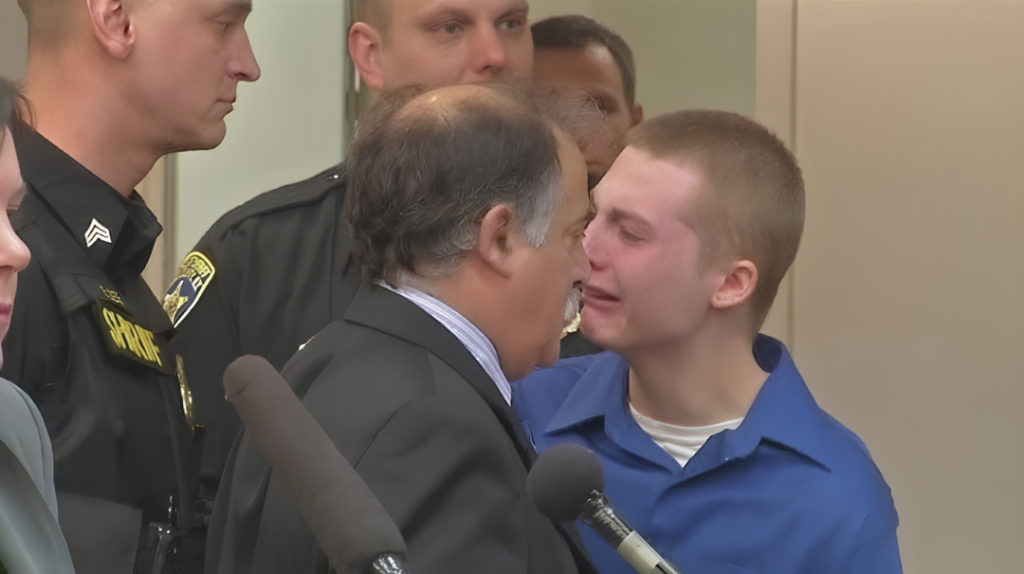

The courtroom fell into an eerie silence as two very different portraits of the same teenager emerged. Prosecutors described a ruthless offender whose actions shattered countless lives, while the defense pleaded for the court to see a young person still capable of growth and redemption. Victims bravely recounted the fear, nightmares, and lasting trauma they continue to endure. Nearby, the teen’s parents sat frozen, watching as their child’s future was weighed not in decades, but in centuries.
Then came the words that stunned everyone: 452 years in prison. Gasps echoed through the courtroom, followed by a heavy silence that spoke louder than any argument.
Beyond the courthouse walls, the sentence sparked an intense nationwide debate. Many believed the punishment was the only way to deliver justice for the victims and ensure public safety. Others questioned whether a teenager, no matter how horrific the crime, should ever be denied the possibility of rehabilitation. The case quickly became more than a legal decision—it evolved into a powerful conversation about justice, accountability, and whether one devastating mistake should determine the course of an entire lifetime.